
Capabilities - Quality & Defect Inspection
Quality & Defect Inspection is designed to turn standard industrial cameras into automatic inspection stations that find surface defects, measure dimensions and check assembly. It is designed to catch scratches, dents, cracks, discoloration, missing components and misaligned parts. It can be set up for a new product line from example images of its defects, and several cameras can cover every surface of a part at once.
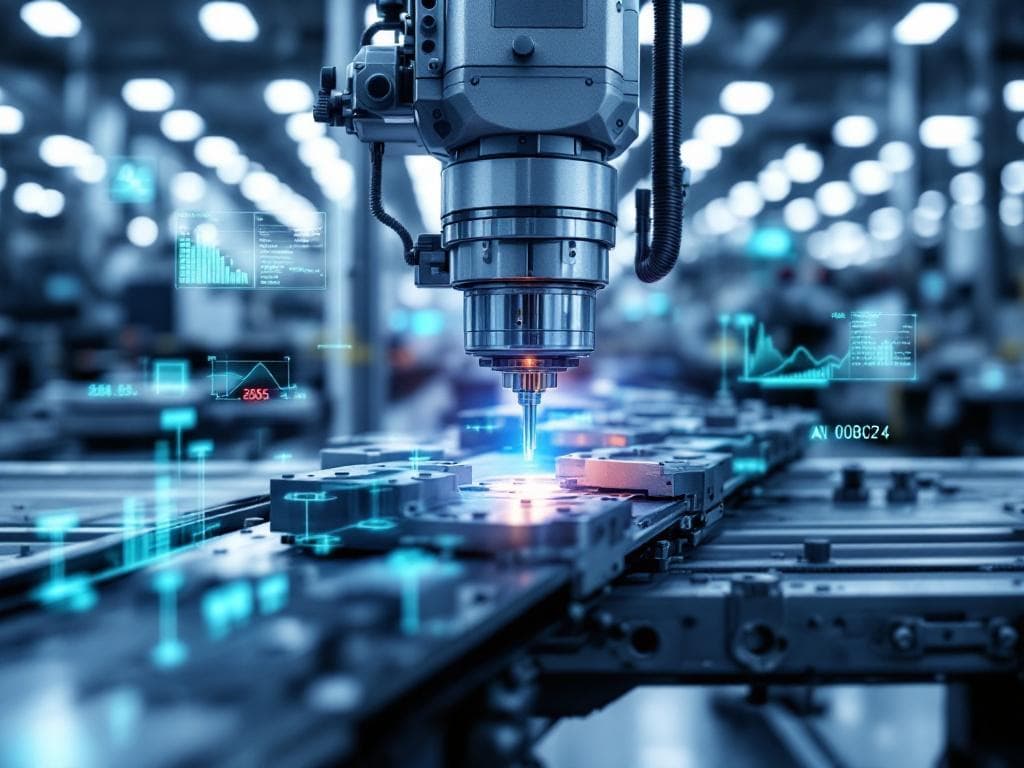
- Defect Detection
- Surface & Assembly
- Surface Defects
- Scratches & Dents
- Every Result Logged
- Pass & Fail
How it works - Quality & Defect Inspection in three steps
How Quality & Defect Inspection works with the cameras you already run.
- Connect Inspection Cameras. Use your cameras above conveyor belts, at station exits or in robotic inspection cells. Standard industrial cameras work.
- AI Inspects Every Part. The system finds and outlines each defect, sorts it by type, and measures parts against your design tolerances. It also compares each part with known good samples.
- Sort, Reject, and Report. Parts over your defect limits can trigger a reject on your line. Every result, pass and fail, is logged with defect images, defect type and measurements.
Features
What Quality & Defect Inspection can do.
- Surface Defect Detection. Identifies scratches, dents, cracks, pitting, staining and discoloration on metal, plastic, glass and composite surfaces. Each defect is outlined to show where it is and how large it is.
- Dimensional Measurement. Measures part dimensions, gap widths, hole positions and edge profiles, and compares them with tolerance bands as parts pass.
- Assembly Verification. Confirms that all components, such as screws, gaskets, labels and connectors, are present and correctly placed. Detects missing parts, wrong orientations and reversed assemblies before packaging.
- Weld Inspection. Analyzes weld bead geometry, detecting porosity, undercut, spatter, and incomplete fusion from external visual cues. Designed as a first-pass screen to prioritize welds for detailed NDT follow-up.
- Packaging Integrity Check. Verifies seal integrity, label placement, fill levels, and package completeness on finished goods. Catches torn shrink wrap, crooked labels, and underfilled containers.
- Golden Sample Comparison. Register a known-good reference part and the system highlights deviations (color shift, texture change, or geometric difference) between production parts and the golden sample.
- Drift Flags. Tracks defect counts, defect types and measurements over time, and flags a process that drifts toward its control limits for your team to review, so it can be corrected.
Use cases
Applications of Quality & Defect Inspection across industries.
Automotive Parts Inspection
Automotive suppliers must maintain near-zero defect rates across stamped, machined, and painted components. Automated inspection can examine every part, catching surface defects and dimensional drift that sampling-based QC misses.
- Automotive
- Manufacturing
Electronics PCB Inspection
Printed circuit board manufacturers need to verify solder joints, component placement and trace integrity. High-resolution cameras can flag cold solder joints, missing components and bridging defects before boards reach functional test.
- Electronics
- Manufacturing
Pharmaceutical Packaging Verification
Pharmaceutical lines require that every package has the correct label, lot number, and seal integrity. Vision-based inspection can verify text accuracy, cap torque indicators, and tamper-evident seal condition.
- Pharma
- Manufacturing
Metal Fabrication Weld Quality
Fabrication shops producing structural steel, pressure vessels, and piping need consistent weld quality across shifts. Camera-based bead inspection can screen every weld for visual defects, routing suspect joints to NDT technicians.
- Manufacturing
- Construction
- Energy
Food and Beverage Quality Control
Food processors must detect foreign objects, color anomalies, and packaging defects before products ship. Vision inspection can identify discolored items, broken seals, and mislabeled packages on filling lines.
- Food Processing
- Manufacturing
Glass and Ceramics Surface Inspection
Manufacturers of glass panels, bottles, and ceramic tiles need to detect chips, bubbles, inclusions, and surface scratches. Line-scan cameras with backlighting can reveal these defects.
- Manufacturing
Try Quality & Defect Inspection at your site
A pilot runs on video from your camera system for an agreed period, and you get a report of the results.
Industries where this applies
Related capabilities
Contact us
Tell us which cameras you have and what you want them to watch for.
- Headquarters
ConductScience Inc.
5250 Old Orchard Rd Suite 300
Skokie, IL 60077
+1 (847) 983-3672 - Sales & Support
info@conductscience.com
Mon to Fri, 9 AM to 5 PM Eastern