
Capabilities - Spill & Leak Detection
Spill & Leak Detection identifies liquids spreading on surfaces, dripping from equipment or pooling in containment areas. The system is designed to catch oil spills on factory floors, chemical leaks at storage tanks, water seepage along pipelines and coolant drips from machinery, flagging small leaks for your team to review. It is designed to tell real spills from shadows, wet cleaning and normal condensation.
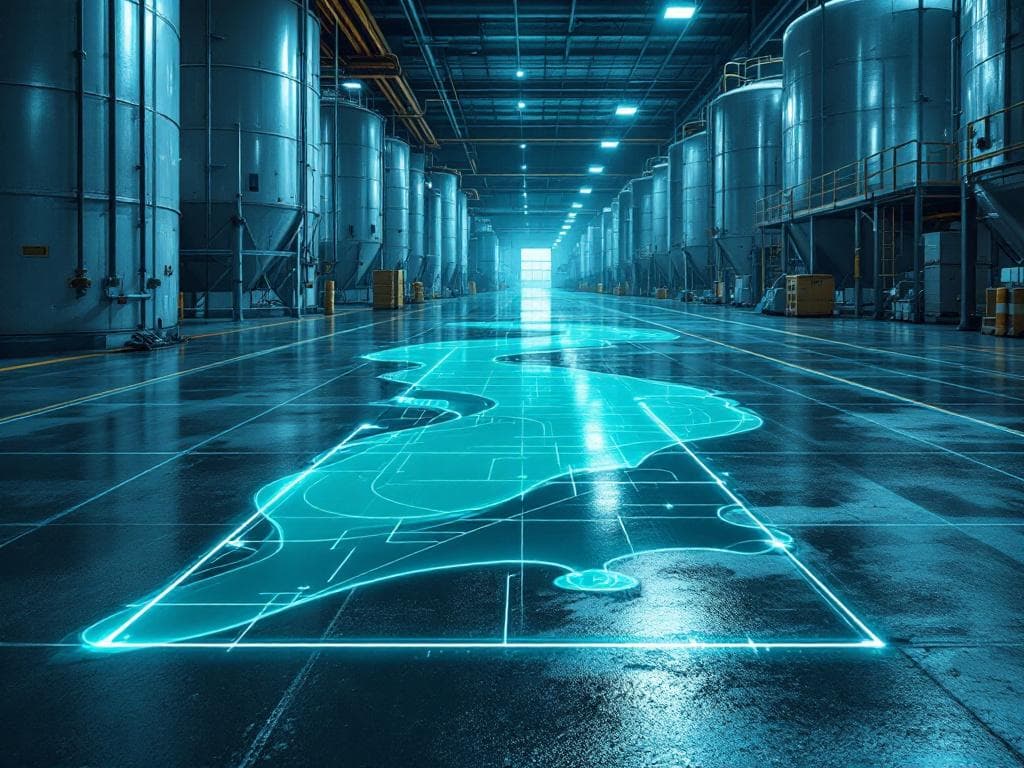
- Liquid Detection
- Visual
- Spill Types
- Oil, Chemicals, Water
- Concrete, Metal, Soil
- Multi-Surface
How it works - Spill & Leak Detection in three steps
How Spill & Leak Detection works with the cameras you already run.
- Connect Cameras at Risk Points. Use your cameras above storage tanks, pipe junctions, containment berms, equipment bases, and floor drains. The system supports both fixed cameras for continuous monitoring and drone-mounted cameras for pipeline surveys across large installations.
- Detect Liquid Anomalies. The system learns what the dry scene looks like and flags new liquid as it appears and spreads. It is designed to ignore normal events such as rain, scheduled wash-downs and condensation.
- Flag and Document. Spills are flagged for your operations team to review, with the camera location, spill area estimate, and a time-lapse sequence showing spread progression. All events are logged with timestamps and imagery for your environmental records.
Features
What Spill & Leak Detection can do.
- Oil and Hydrocarbon Spill Detection. Identifies the characteristic sheen and spreading pattern of oil and hydrocarbon spills on concrete, water surfaces, and soil. Designed for motor oil, hydraulic fluid, diesel, and lubricant leaks.
- Chemical Leak Monitoring. Detects liquid pooling and surface discoloration associated with chemical leaks at storage tanks, pipe fittings, and valve assemblies. Color-change detection can identify certain reactive chemicals by their visual signature.
- Water Leak and Seepage Detection. Monitors for water accumulation from pipe leaks, roof seepage, and condensation failures in mechanical rooms, data centers, and warehouse facilities.
- Spill Area Estimation. Estimates the area and rough volume of each spill, and tracks how fast it spreads to help set containment urgency.
- Learns the Normal Scene. The system learns the normal dry appearance of each monitored area over time, adapting to lighting changes, seasonal conditions, and normal wet/dry cycles to minimize false detections.
- Pipeline Aerial Survey. Drone-captured video of pipeline corridors is processed to detect surface staining, vegetation die-off patterns, and visible leaks along above-ground and partially buried pipeline routes.
- Environmental Compliance Logging. Every detection event is documented with timestamps, imagery, estimated spill area, and response actions. Reports can be generated for environmental audits and incident investigations.
Use cases
Applications of Spill & Leak Detection across industries.
Oil and Gas Facility Monitoring
Refineries and tank farms contain thousands of potential leak points across pipes, valves, and storage vessels. Camera-based monitoring can provide an always-on detection layer that catches small leaks before they escalate to reportable spill events.
- Energy
- Chemical
Manufacturing Floor Spill Response
Machine tool coolant, hydraulic oil, and process chemicals can leak onto factory floors, creating slip hazards and contamination. Early detection enables rapid cleanup before the spill spreads or a worker is injured.
- Manufacturing
- Automotive
Pipeline Integrity Monitoring
Pipeline operators need to detect leaks along hundreds of kilometers of infrastructure. Drone surveys with onboard cameras can identify surface evidence of underground leaks: soil staining, vegetation changes, and visible seepage.
- Energy
- Utilities
- Government
Data Center Water Leak Prevention
Cooling systems in data centers carry significant water leak risk. Cameras positioned under raised floors and near CRAC units can detect the first signs of pooling water.
- Corporate
- Technology
Chemical Storage Compliance
Chemical warehouses must monitor containment berms and secondary containment areas for accumulation. Continuous camera monitoring can verify that containment systems are functioning and detect overflow before chemicals reach storm drains.
- Chemical
- Logistics
- Manufacturing
Mining Tailings and Process Water
Mining operations generate tailings ponds and process water systems that must be monitored for leaks and overflows. Camera-based detection can supplement physical sensors along dam faces and discharge channels.
- Mining
- Environmental
Try Spill & Leak Detection at your site
A pilot runs on video from your camera system for an agreed period, and you get a report of the results.
Related capabilities
Contact us
Tell us which cameras you have and what you want them to watch for.
- Headquarters
ConductScience Inc.
5250 Old Orchard Rd Suite 300
Skokie, IL 60077
+1 (847) 983-3672 - Sales & Support
info@conductscience.com
Mon to Fri, 9 AM to 5 PM Eastern