
Smart city - Before and after studies for street projects
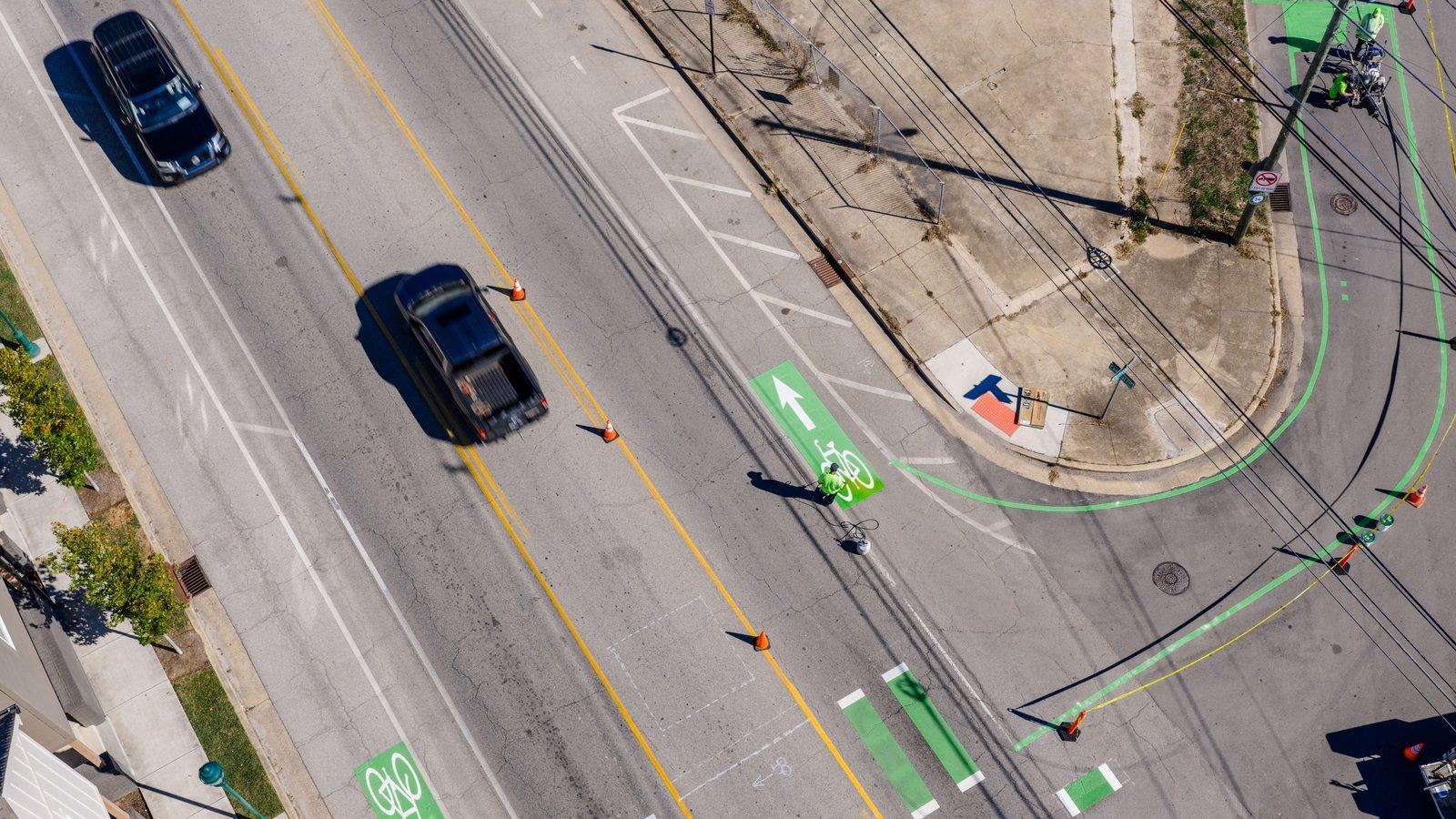
A road diet, a new crosswalk or a leading pedestrian interval changes how people use a street. In a pilot, ConductVision can measure the location before and after the change, from the same camera views.
How a study runs
Set the measures
Your team chooses the location, the measures and the criteria before any results come in.
Measure before
The location, from recorded video, before the change.
Make the change
Your crews make the change, temporary or permanent.
Measure after
The same camera views, the same hours of the day and the same measures.
Read the report
What changed, what else changed at the location and what your team can say from it.
What you can compare
In a pilot, ConductVision can count road users and can be set up to measure the rest.
Speeds
The 85th percentile speed and speeds by hour.
Driver yielding
How often drivers stop or slow for people waiting to cross.
Near misses
Close calls by movement and by hour.
People walking and riding
Whether more people use the street after the change.
Where people cross
Whether people use a new crossing.
Turning movements
Left, through and right for each approach.
Without waiting for crashes
Crash counts can take years to show a change, so a study can also use counts, speeds and near misses. A flagged near miss is a reason to look at a location. It is not a prediction of crashes. Near misses add to your crash records. They do not replace them.
What a comparison can say
A before and after study shows what changed at that location. Weather, season and other work nearby can move the numbers too, so the study matches days and hours, and the report says what else changed.
Pilot - How a pilot starts
A paid pilot covers one location, before and after one change. Your team sets the criteria before any results come in. You decide whether to roll out, change the scope or stop.
- You bring
- Recorded video from the cameras at the location, and your project plan. A first look at your footage shows whether the camera views will work.
- We set up
- ConductVision for your camera views. A measure that is right at one camera may not be right at the next, so before results go out a ConductVision engineer measures a sample from each camera by hand to check them.
- You get
- Results before and after the change, and a final report on whether the pilot met the criteria your team set.
Related pages
- Safe Streets and Roads for AllBefore and after data for demonstration activities.
- Speed studies85th percentile speed from video.
- Near miss analysisWhere road users nearly collide.
- Traffic countsTurning movement counts and volumes from video.
- Sample street reviewWhat you get at the end of a street pilot.