
Fabric defect · Holes, threads and stains - Loose threads and hanging threads in fabric
A loose or hanging thread is a yarn end or loop that lies on the face of the fabric or hangs from it. Whether it costs a roll points is usually for your buyer and you to agree.
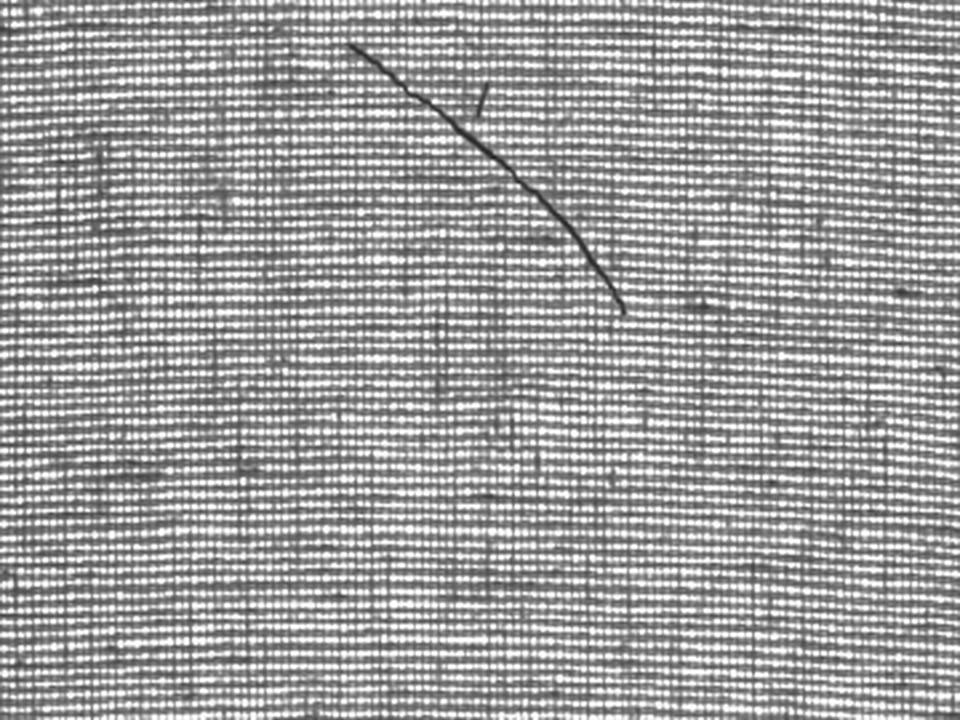
What ConductVision Textile records
ConductVision Textile is designed to flag each defect with its place on the roll, its size, its points and a still image. Your inspector names the defect and confirms or dismisses it.
On the defect map in the roll report, a loose thread is a spot.
What loose threads are
A U.S. federal glossary of fabric imperfections lists "hang or loose threads" among the imperfections that make woven wool and worsted cloth thicker than normal, and calls the term self-descriptive 1. Its list of filling defects has the kink, "a place in the cloth where a short length of yarn has spontaneously doubled on itself," which it also calls a loop 1.
Knitting uses a similar word for a different fault: in a U.S. military glossary of knitting imperfections, loose yarn is "yarn that has been knit-in under insufficient tension" 2.
What leaves loose threads
These causes come from Goldberg's 1950 casebook of shuttle looms, so on a modern loom look for the parts that do the same job.
| Stage | What happens | What to check |
|---|---|---|
| Weaving | Goldberg puts filling kinks and uneven or loopy selvedges down to waste behind the drop wires, too little tension on the yarn, or filling caught on the shuttle 3. | Drop wires, filling tension and the shuttle |
| Weaving | A shuttle feeler that works badly can leave loopy selvedges or pulled-in, "jerked-in" filling 3. | The shuttle feeler |
| Winding | Kinky filling from yarn that slipped off the bobbin during weaving, generally put down to too little tension in winding or too low a humidity 3. | Winding tension and room humidity |
Where loose threads show on a roll
A loose thread is a spot and can sit anywhere along the roll. Loops from a loopy selvedge sit at the edge of the fabric 3.
How loose threads count
Rules for loose threads come from the buyer. Cotton Incorporated's grading guide says the purchaser and the supplier may agree on the kind, location, maximum size and frequency of a fabric characteristic that is not counted as a defect 4.
The same guide counts every defect visible at normal inspection speed from one yard or one metre, and notes that many small defects fall in the parts cut away when end items are made 4. A hanging thread left on the goods can cost more later: Goldberg lists slubs, bunches and hanging threads accidentally pulled out among the causes of holes in dyeing and finishing 3.
Sources
- 1U.S. General Services Administration, Federal Standard No. 4b, Glossary of Fabric Imperfections (1964)
- 2U.S. Department of Defense, MIL-STD-1491, Glossary of Knitting Imperfections (1971)
- 3J. B. Goldberg, Fabric Defects: Case Histories of Imperfections in Woven Cotton and Rayon Fabrics, McGraw-Hill (1950)
- 4Cotton Incorporated, Visual Inspection and Grading of Fabrics
Pilot - How a pilot starts
We start with recorded video of your inspection frame and agree with your team on one fabric to test. The pilot runs for a set time, and before it starts we agree on what counts as success. For each defect it marks, ConductVision saves a still image and its place on the roll on your network for your inspector to check.
- You bring
- Recorded video of fabric running over your inspection frame
- We set up
- One fabric, and the limit you grade it against
- You get
- Marked defects, running points and a final points forecast for each roll, and a results report checked against what we agreed
One question to start with
Which fabric shows loose threads most often?
Related pages
- HolesAn opening where yarns have broken or been cut.
- Snags and pulled threadsA yarn pulled out of place by a sharp point.
- SlubsA short, thick place in the yarn.
- Defect positionWhat a defect's place on the roll points to
- Fabric inspection reportWhat each roll's report holds
- Fabric defect libraryWoven, knit and yarn defects, and how they are measured